
Fractals: When Patterns Repeat at Every Scale
A discoveryWithgrace special
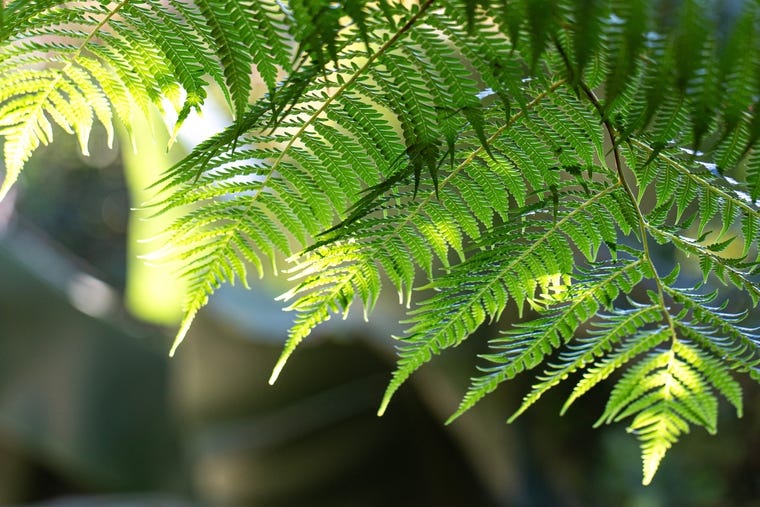
I have thought about this topic so much that I have spent a lot of time researching what is known as a never ending pattern …
To those reading my work for the first time, I want to tell you about myself before we go further into today’s discussion. My name is Akinlo Oluwaferanmi Hector, but you can call me Hector. I am 17, Nigerian, and in my first year of college studying to become a dentist 🦷. I started writing last October, and since then I’ve been trying to show up consistently. This year, I set a goal to write biweekly essays. Writing every week felt like it might drain me, so I chose a rhythm that would allow me to balance school and writing without exhaustion.
Although last month my momentum waned, I didn’t know how the wind caught up with me. I suddenly lost the urge to write. I couldn’t sit down like I used to. It felt like I had a screw loose, and even the best of mechanics couldn’t fix me. I lost focus, and unfortunately I learned to stop putting down my thoughts. I reflected on that moment and felt awful for almost letting the one habit I was building slip away.
But today-today being a new month-I have decided to change the narrative. Yes, I have picked up the pen, and its ink will flow endlessly. My words will no longer be trapped in hesitation; they will breathe, they will dance, they will remind me that silence is not my destiny.
This month, I choose consistency over doubt, progress over pause, and expression over suppression. I will write not because it is easy, but because it is necessary. My pen is my compass, and with it, I will chart new paths, one line at a time
I welcome you once again, readers old and new, to my space. I hope you find meaning in what I share today and in the future.
Just as I have chosen to pick up my pen again, I find myself drawn to the idea of patterns- those rhythms of life that repeat, sometimes fading, sometimes returning stronger. And that brings me to today’s subject: fractals.
Fractals are more than just mathematical curiosities; they are never-ending patterns, shapes that repeat themselves at different scales. They remind me of the cycles we go through as humans-the pauses, the restarts, the growth that comes from repetition. In the same way that a fractal reveals beauty through its infinite layers, I believe our habits and creative journeys reveal meaning when we keep returning to them, no matter how many times we stumble.
So today, I want to explore fractals not only as a concept in mathematics and nature, but also as a metaphor for persistence, creativity, and the endless flow of words that I hope to keep alive in my writing.
This essay is a fractal.
Each section is a smaller version of the whole. Each idea branches into smaller ideas. Each paragraph mirrors the structure of the essay itself. I'm not being clever. I'm showing you how fractals work-by being one.
But I didn't understand fractals until I looked inside myself. Literally.
I Found a Fractal in My Lungs
I'm a first-year dentistry student. Which means I spend a lot of time staring at anatomy diagrams, memorizing structures, trying to understand how bodies work.
Last month, I was studying the respiratory system.
Trachea. Bronchi. Bronchioles. Alveoli.
Standard stuff. Boring, even.
But then I saw it.
Self-similarity.
The respiratory tree; trachea splitting into bronchi, bronchi splitting into bronchioles, bronchioles splitting into alveolar ducts—wasn't just branching randomly.
It was following a pattern.
A dichotomous repeating pattern. Like a tree canopy. Like a fern.
Each branch splitting into two smaller branches. Each smaller branch splitting into two even smaller branches. Again. And again. And again.
Twenty-three times.
Until you reach the alveoli; tiny air sacs where oxygen enters your blood and carbon dioxide leaves.
And here's the wild part:
There are approximately 600 million alveoli in your lungs.
Six hundred million.
All fitting inside your chest cavity-a limited thoracic volume because of fractal geometry.
The branching pattern maximizes surface area for gas exchange while minimizing the space required.
It's not random. It's optimized.
It's a fractal.
And I stopped.
Because I realized:
I'm breathing through math right now.
Every inhale. Every exhale. Every moment of my life.
My lungs are following a pattern that appears in trees, ferns, rivers, coastlines, galaxies.
I am made of patterns.
And that's when it hit me:
It takes enough connection to breathe, to live, to grow.
Not just physical connection (alveoli to capillaries, oxygen to blood).
But connection at every scale.
Ideas connecting to ideas. Moments connecting to habits. Habits connecting to years.
Patterns repeating at every level.
That's fractals.
And once you see them, you can't unsee them.
What Are Fractals?
A fractal is a pattern that looks the same at every scale.
Zoom in. Same pattern.
Zoom out. Same pattern.
It's self-similar; the part resembles the whole.
Examples You Can See Right Now:
Ferns: Look at one frond (leaf). Notice the shape. Now look at each tiny leaflet on that frond. Same shape. Smaller scale.
Coastlines: Open Google Maps. Find any coastline. Zoom out—jagged line. Zoom in—still jagged, MORE detail appears. Zoom in again—infinite complexity reveals itself.
Trees: Trunk splits into branches. Branches split into twigs. Twigs split into smaller twigs. Same branching pattern, different sizes.
Your lungs: Trachea → bronchi → bronchioles → alveolar ducts → alveoli. Same splitting pattern, twenty-three levels deep.
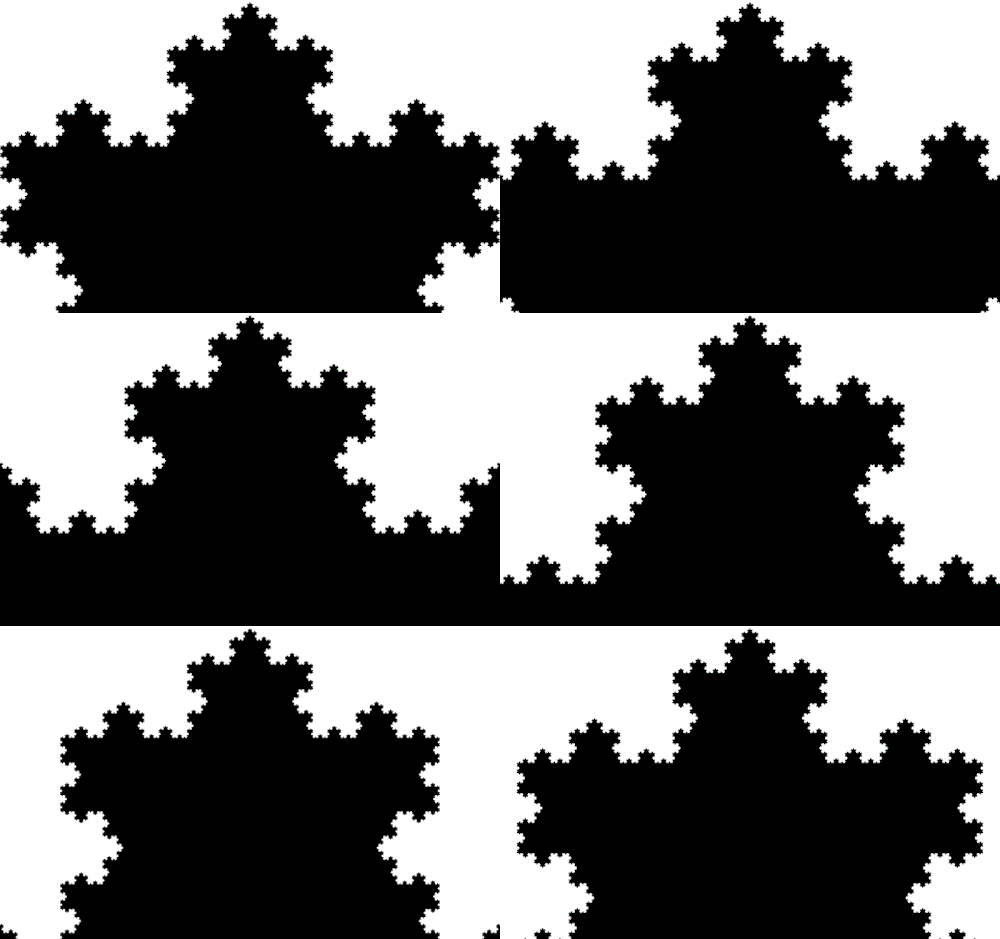
The Math (Don't Worry, I'll Keep It Simple):
Fractals are generated by simple rules repeated infinitely.
Example: The Koch Snowflake
Start with a triangle.
Add a smaller triangle to the middle of each side.
Repeat step 2 on every new side.
Repeat forever.
Result: A snowflake shape with infinite perimeter but finite area.
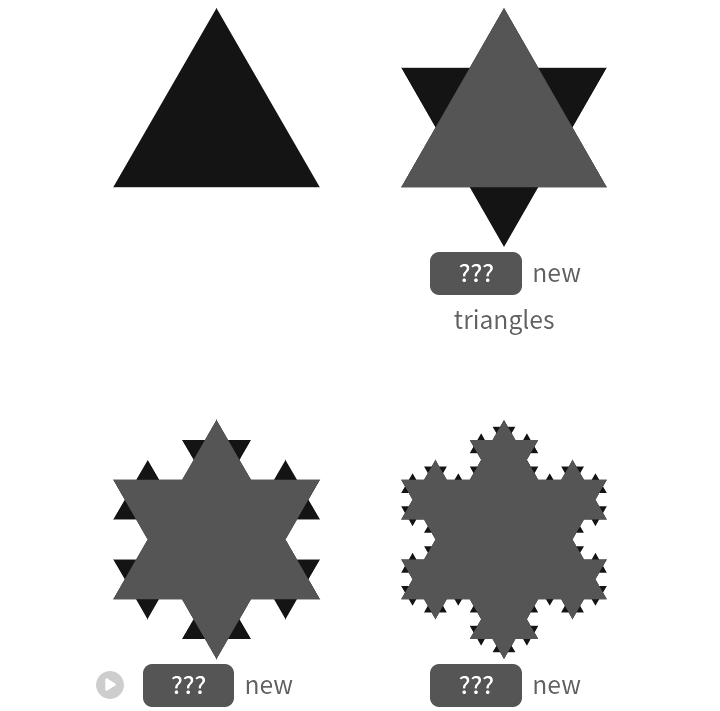
The pattern is simple. The result is infinitely complex.
That's fractals.
Simple rule + infinite repetition = complexity beyond comprehension.
Why Your Lungs Are Fractal (And Why That Matters)
Let's go deeper into the lungs.
Because this isn't just cool biology. This is life-or-death optimization.
The Problem Your Lungs Solve:
Your body needs oxygen. Constantly.
Every cell in your body is burning fuel (glucose) to create energy. That process requires oxygen.
But oxygen is in the air outside your body. Your cells are inside.
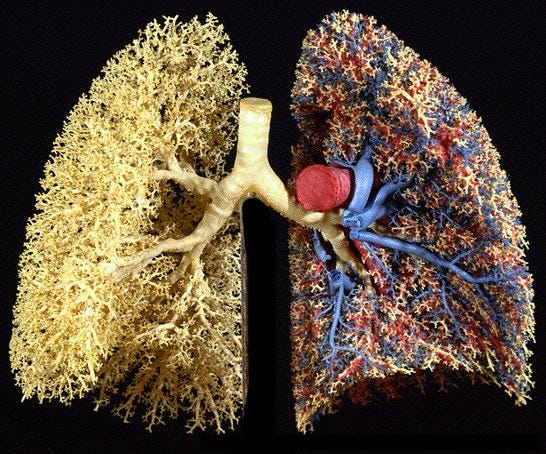
How do you get oxygen from outside to inside?
Surface area.
The more surface area your lungs have in contact with air, the more oxygen can transfer into your bloodstream.
But here's the constraint: your lungs have to fit inside your chest.
So the question becomes:
How do you maximize surface area while minimizing volume?
Answer: Fractals.
How Lung Fractals Work:
Your lungs don't have one big balloon where air sits.
They have 600 million tiny balloons (alveoli) connected by a branching network.
The branching follows a fractal pattern:
Trachea (1 tube) splits into...
Bronchi (2 tubes) split into...
Bronchioles (millions of smaller tubes) split into...
Alveolar ducts split into...
Alveoli (600 million air sacs)
Each split doubles the number of tubes.
Each level increases surface area exponentially.
By the time you reach the alveoli, the total surface area is approximately 70 square meters.
That's the size of a tennis court.
Inside your chest.
All because of fractal branching.
Why This Is Genius:
If your lungs were just one big sac, you'd need a chest the size of a room to get the same surface area.
But fractals let nature pack massive surface area into tiny volumes.
Efficiency.
Just like Fibonacci spirals in sunflowers (maximum seed packing), fractal lungs give you maximum oxygen transfer in minimum space.
Nature doesn't waste.
It optimizes.
And the tool it uses, again and again, is patterns that repeat at every scale.
Fractals Everywhere (Once You Start Looking)
Your lungs aren't special.
Well, they are. But they're not unique in being fractal.
Fractals are everywhere.
In Nature:
Trees:
Trunk → branches → twigs → leaves. Same splitting pattern. Different scales.
Why? To maximize sunlight capture without using excess material.
Rivers:
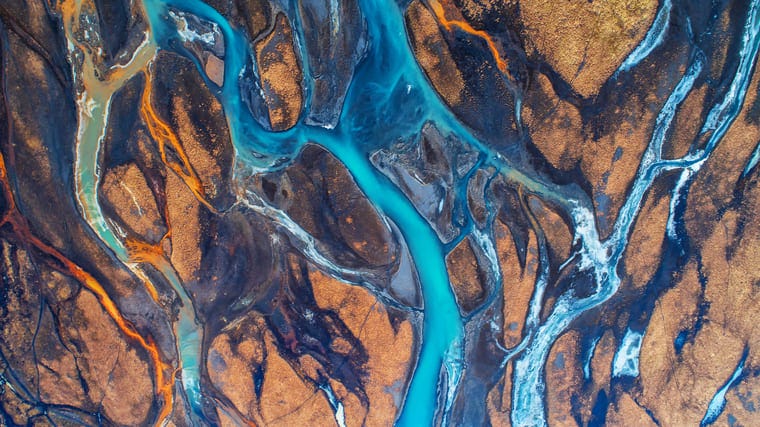
Main river → tributaries → streams → rivulets. Fractal drainage networks.
Why? To collect water from maximum area with minimum resistance.
Blood vessels:
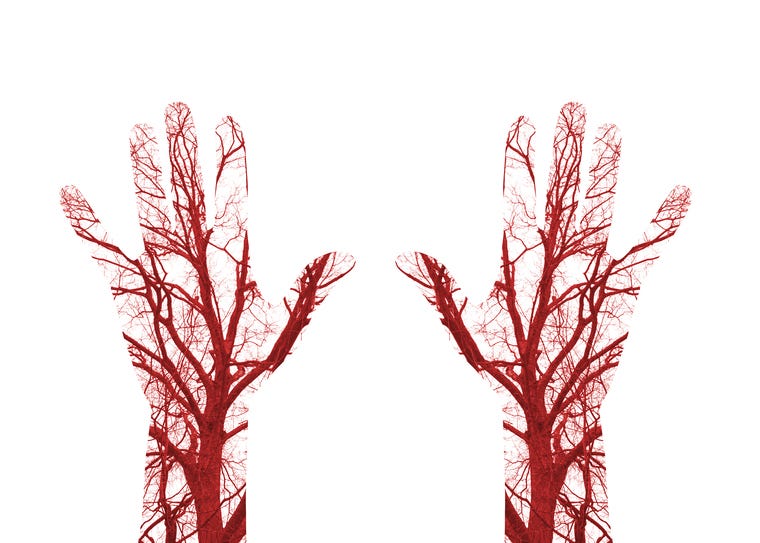
Arteries → arterioles → capillaries. Fractal branching.
Why? To deliver oxygen to every cell in your body efficiently.
Mountains:
Large peaks have smaller peaks have smaller ridges have tiny bumps. Self-similar roughness at every scale.
Why? Erosion follows fractal patterns—water carves smaller channels within larger channels.
Lightning:
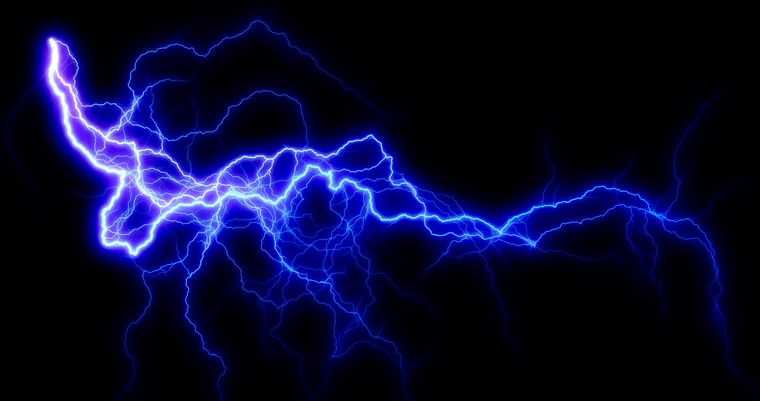
Main bolt splits into branches. Branches split into smaller forks. Fractal discharge.
Why? Electricity follows the path of least resistance, which creates fractal branching as it ionizes air.
Snowflakes:
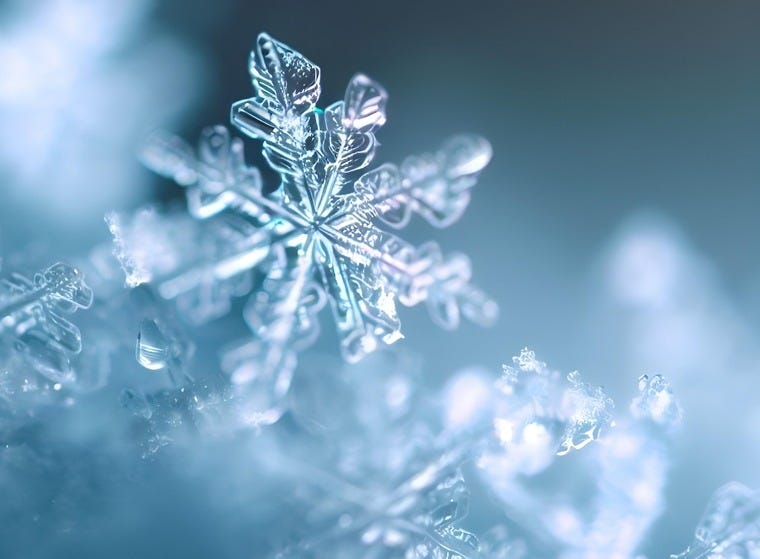
Six-fold symmetry. Infinite variation. Self-similar structure.
Why? Ice crystals grow following simple molecular rules, repeated at every scale.
In Your Body:
Neurons: Dendrites branch fractally to maximize connections with other neurons
Intestines: Villi and microvilli create fractal surface area for nutrient absorption
Kidneys: Nephrons branch fractally to filter blood efficiently
DNA: Double helix structure has fractal properties at molecular scale
You are made of fractals.
Every system optimized for efficiency.
Every structure repeating patterns at every scale.
As Above, So Below (The Philosophy)
Here’s where it gets deep.
Fractals aren’t just biology or geometry.
They’re a principle.
“As above, so below.”
Ancient hermetic wisdom that turns out to be... mathematically true.
What happens at one scale happens at all scales.
The part reflects the whole.
The micro mirrors the macro.
Your Daily Habits = Your Life Trajectory
One day of discipline doesn’t change much.
But repeat that day.
One day → one week (pattern emerges).
One week → one month (habit forms).
One month → one year (identity shifts).
One year → one decade (life transforms).
Small patterns compound into large patterns.
Your life is a fractal of your days.
Your decade is a fractal of your years.
Zoom in: one choice.
Zoom out: one destiny.
Same pattern. Different scale.
Your Family = Society
The way you treat your siblings mirrors how groups treat outsiders.
Power dynamics in your household mirror power structures in governments.
Communication patterns in your family mirror communication patterns in organizations.
Micro social structures reflect macro social structures.
If you want to understand society, look at a family dinner.
If you want to change society, start at your own table.
As above, so below.
Your Cells = Ecosystems
A cell maintains homeostasis (balance).
Your body maintains homeostasis.
Ecosystems maintain homeostasis.
Same principle. Different scales.
A cell regulates what enters and exits through its membrane.
Your body regulates what enters and exits through your skin, lungs, digestive system.
An ecosystem regulates what enters and exits through borders, seasons, food chains.
Self-similarity across biology.
The pattern that keeps one cell alive is the same pattern that keeps a forest alive.
Your Thoughts Branch Like Trees
One idea splits into two thoughts.
Each thought splits into questions.
Each question branches into possibilities.
Your mind is a fractal.
This essay started as one thought: “Lungs are fractal.”
That thought branched into:
What are fractals?
Where else do they appear?
What does this mean philosophically?
Each branch split into smaller branches:
Nature examples
Body examples
Life examples
Each smaller branch split again:
Trees, rivers, lightning
Neurons, blood vessels, intestines
Habits, families, thoughts
And here we are.
Twenty-three branches deep.
Just like your lungs.
Patterns repeating at every scale.
It Takes Enough Connection to Breathe, to Live, to Grow
This is what stopped me when I saw the lung diagram.
Connection.
Your alveoli connect to capillaries.
Oxygen connects to hemoglobin.
Blood connects to cells.
Cells connect to tissues.
Tissues connect to organs.
Organs connect to you.
At every level, connection = life.
Break the connection anywhere—alveoli to capillaries, oxygen to blood—and you suffocate.
But it’s not just physical.
Mental Connection:
Ideas need to connect to become understanding.
One isolated fact is trivia.
Two connected facts become insight.
Three connected insights become theory.
Five theories become philosophy.
Connection creates meaning.
Social Connection:
You need connection to others to grow.
Not surface-level. Deep.
One meaningful relationship is better than a hundred shallow ones.
Because depth = branching.
One friend connects you to their ideas, their experiences, their world.
That connection branches into new perspectives, opportunities, growth.
Isolation = stagnation.
Connection = expansion.
Creative Connection:
Writing is fractal.
One essay connects to another.
Each essay branches into ideas.
Each idea connects to readers.
Each reader branches into their own interpretations.
The pattern grows.
My Fibonacci essay connected to this fractals essay.
This essay will connect to the next.
Each one a branch on a larger tree I’m still growing.
And I can’t see the full shape yet.
Because I’m inside the fractal.
But the pattern is working.
Connection by connection.
Branch by branch.
The Dark Side: When Fractals Trap You
Not all fractals are healthy.
Some patterns need to be broken.
Anxiety Spirals
One worry → two thoughts → three fears → five scenarios → eight catastrophes.
Each fear branches into smaller fears.
Zoom in: “What if I fail this exam?”
Zoom out: “What if I fail this year, drop out, disappoint my family, waste my life, die alone?”
Fractal panic.
Same pattern of catastrophizing, repeating at every scale.
The spiral tightens until you can’t breathe.
Ironic, isn’t it?
Your lungs are fractals that help you breathe.
Your anxiety is a fractal that makes you suffocate.
Doomscrolling
One video → two videos → three hours gone → five regrets → eight more videos to numb the regret.
Fractal procrastination.
Each scroll branches into more scrolls.
Each regret branches into more avoidance.
The pattern repeats.
You zoom in (one more video).
You zoom out (entire afternoon wasted).
Same pattern. Different scale.
And here’s the trap:
Bad fractals compound just like good ones.
One day of doomscrolling → one week → one month → one year of lost time.
The pattern scales.
How to Break a Bad Fractal
Fractals are generated by simple rules repeated infinitely.
Koch Snowflake rule: Add a triangle to each side. Repeat.
Anxiety fractal rule: Ask “What if this goes wrong?” Repeat.
Doomscroll fractal rule: “Just one more video.” Repeat.
To break the fractal, change the rule.
Instead of: “What if this goes wrong?”
New rule: “What if this goes right?”
Repeat that. See what fractal emerges.
Instead of: “Just one more video.”
New rule: “One intentional choice.”
Repeat that. Watch your day transform.
Small rule changes = massive pattern shifts.
Because fractals compound.
Good or bad.
Choose your rules carefully.
You Are a Fractal (Choose Your Patterns)
Let's bring it all together.
You are a fractal.
Your DNA is a fractal (double helix → chromosomes → genes → base pairs).
Your lungs are a fractal (trachea → bronchi → bronchioles → alveoli).
Your blood vessels are a fractal (arteries → arterioles → capillaries).
Your neurons are a fractal (dendrites branching infinitely to connect with other cells).
Your thoughts are a fractal (one idea branching into infinite possibilities).
Your life is a fractal (each day a smaller version of your year, each year a smaller version of your story).
And maybe—just maybe—you're part of a larger fractal.
A family.
A community.
A nation.
A species.
A universe.
Each level reflecting the others.
As above, so below.
Patterns repeating at every scale.
Infinite complexity from simple rules.
So Here's the Question:
What rules are you repeating?
Because whatever you do today, you'll do tomorrow.
And the day after.
And the year after.
The pattern will scale.
If your rule is: "Study one hour, doomscroll five hours."
Repeat that for a year.
You'll have a year of shallow learning and deep regret.
If your rule is: "Write 500 words, even when I don't feel like it."
Repeat that for a year.
You'll have 180,000 words. That's two books.
If your rule is: "Show up for one person. Deeply."
Repeat that for a decade.
You'll have built a community.
Small patterns compound into large realities.
That's not motivation.
That's not inspiration.
That's fractals.
That's math.
That's how life actually works.
The Fractal Continues
I'm writing this in my first year of dentistry.
Studying anatomy. Memorizing structures. Trying to understand how bodies work.
And I keep finding patterns.
First Fibonacci (spirals in sunflowers, DNA, growth).
Now fractals (branching in lungs, trees, thoughts).
I'm starting to see the world as patterns repeating at every scale.
And maybe that's what learning is.
Not memorizing facts.
But recognizing patterns.
Seeing how one thing connects to another connects to another connects to everything.
Connection by connection.
Branch by branch.
Breath by breath.
It takes enough connection to breathe.
Alveoli to capillaries. Oxygen to blood. Blood to cells.
It takes enough connection to live.
Ideas to understanding. People to community. Moments to meaning.
It takes enough connection to grow.
One essay to another. One day to a year. One choice to a life.
Patterns repeating.
Scaling infinitely.
As above, so below.
You are breathing through a fractal right now.
You are living inside a fractal right now.
You are building a fractal right now.
So choose your pattern carefully.
Because it will repeat.
And repeat.
And repeat.
Until it becomes everything.
Welcome to the fractal. 🌀💚
— Oluwaferanmi
P.S. Next time you take a deep breath, remember: you just moved air through 23 levels of fractal branching to reach 600 million alveoli. Your body is doing calculus every second without you even thinking about it. Respect the math. Respect the pattern. Respect the connection.
P.P.S. If you find yourself in an anxiety spiral or doomscroll fractal, remember: you can change the rule. One different choice. Repeat it. By Watch the pattern shift. You're not stuck. You're just repeating the wrong rule. Change it. The fractal will follow.
Great piece! Cannot believe you are only 17 and you can write with such a maturity.
THIS IS SO GOOD🙌